Thursday, 27 September 2012

Introduction


Was the invasion of Tibet in 1951 a so-called 'peaceful liberation' or was it an invasion followed with over 50 years of brutality and suppression under Chinese rule? I am arguing that what the government of the People’s Republic of China calls a 'peaceful liberation' is anything but peaceful and I will give arguments to prove it in light of recent news reports and also of the issues history. The Tibet issue has been a highly controversial topic and also has been hot on the headlines for the past 60 or so years. I am going to look at both perspectives that being from the Chinese perspective and also from the Tibetan perspective in relation to the issue of potential Tibetan independence. The topic of Tibetan liberation and independence is a very vast topic to deal with as it is a religious, political, and environmental issue as well as the violation and clear neglect of fundamental human rights. Abuses of human rights in the region include that of torture, disappearances, poor and unjust prison sentences, denial of fair public trial, denial of freedom of speech and of press and Internet freedoms. They also include political and religious repression, forced abortions, sterilisation, and also infanticide. Of course with every issue there is two sides and perspectives concerning the topic either being for or against. In terms of the current situation in Tibet and the plight of the Tibetan people there is either a stance in support of Tibet being under Beijing rule or for the possible independence of Tibet.

Background and historical events leading up to the Issue


 The landlocked nation of Tibet is situated between two of the most populous nations of the world, India and China and is separated from India in the south by the towering Himalaya mountain range and from China in in the northeast also by extensive mountain ranges. Since the 13th century following Mongol rule, the Tibetan Plateau has been either under Chinese control or influence on and off for well over seven centuries. In 1910 the Chinese Empire led a military invasion and eventually captured the region one year later in 1911, the time of revolution in the mainland. Until the 1940's Tibet operated as an independent nation. Yet Tibet's independence was only short-lived as the situation changed upon China becoming a communist state under Chairman Mao Zedong in in the year 1949 and the subsequent birth of the People’s Republic of China.
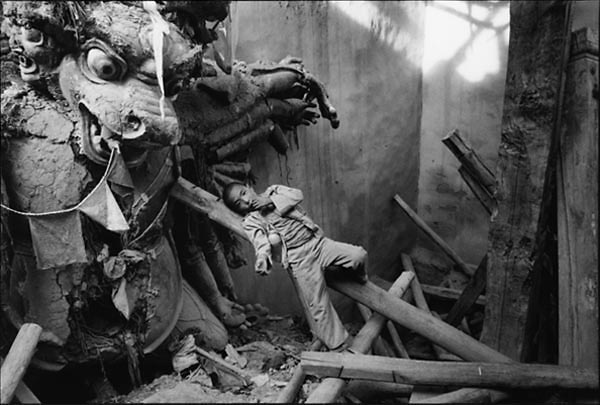
 In the year 1951 the Tibetan Plateau was invaded by the People’s Republic of China and subsequently the current Dalai Lama (Tenzin Gyatso) escaped into northern India for asylum and eventually was followed by approximately 80,000 Tibetan follower refugees during the following months. The PRC has also destroyed numerous monasteries and historical places of both cultural and religious significance. The Tibetan capital Lhasa is now Han Chinese in majority  and governed by a pro-Chinese puppet, called the Panchen Lama of whom is not recognised by the exiled Dalai Lama. The Dalai Lama was awarded the Nobel Peace Prize in the year 1989 for his peaceful resistance to the oppression of his people and a model for all oppressed peoples the world over. Since the invasion by the People’s Republic of China, Tibet has been under Chinese rule and is till this day. Tibetans feel their culture is under threat and sadly artefacts of cultural and historical significance have been destroyed. The Chinese People’s Liberation Army soldiers upon capturing the capital, Lhasa shelled the Dalai Lamas summer palace with around 800 shells destroying the ancient building as well as around 300 houses in the Palaces vicinity. Many Monasteries have been destroyed since the Cultural Revolution swept China and as a result many ancient artefacts and places of cultural and religious significance have been lost and religion has been suppressed under Communist rule.

Threat to Tibetan culture and way of life and the Chinese standpoint


 During over 60 years of Chinese rule, an estimated 1.2 million ethnic Tibetans have been killed according to the 14th Dalai Lama. Under 'sinicization' or changing Tibetan society and culture to resemble that of the Han Chinese. Most recently European parlements have been concerned about the forced state housing of 1.5 million 'Drokpa' (Tibetan nomads who make up a third of the approximate 6 million Tibetan population) and how their nomadic way of life is under threat. The Drukpa nomads are the second largest nomadic group in the world following Mongolia. The Chinese Government claims that Tibet is becoming a better place than what it used to be before the occupation. About 95 percent of the overall Tibetan population before 1959 were illiterate not being able to read or write. China also claims Tibetan culture is well preserved. Even if we take these arguments as fact, one must wonder about the cost of 'raising the quality of life' in Tibet. Was it worth the deaths of over 1.2 million people? If China claims that Tibet is becoming a much better place than what it was before the invasion why were tourists not permitted to enter the region until the mid 1980's? What is there to hide?

My view and my conclusion


In my opinion there are no ways to justify the ill treatment of the Tibetan people and the costs of Chinese occupation. In the light of facts it is rather sad to see world governments turning a blind eye to the issue and not taking a stand against Chinese illegal occupation of Tibet. Who knows what the future holds for long suppressed Tibet. China's larger neighbour the former USSR once had a remarkably similar situation to China today. The USSR invaded and controlled many countries for many years such as Kazakhstan, Azerbeijan and also the Eastern bloc countries until the fall of communism in the USSR and the fall of the iron curtain in Eastern Europe. So perhaps judging from history this could possibly happen with Chinas autonomous regions aswell. Similarly East Turkestan (Xinjiang) to the north west of Tibet is controlled by China, and the Uyghur people have gone through a similar story. In conclusion Tibet is a good lesson to all similarly suppressed people the world over and with the increase in media and intenet, awareness of the plight of the Tibetan people is becoming increasingly well known. To end i ask the reader was the invasion of Tibet in 1951 a so-called 'peaceful liberation' or was it an invasion followed with over 50 years of brutality and suppression under Chinese rule? I leave it up to you to decide.


Monday, 24 September 2012

References


References list:


B.B.C.News(n.d.).1959: Dalai Lama escapes to India. Retrieved August 25 , 2012, from             http://news.bbc.co.uk/onthisday/hi/dates/stories/march/31/newsid_2788000/2788343.       stm


B.B.C.News.(n.d).History. Retrieved August 25, 2012, from             http://news.bbc.co.uk/2/shared/spl/hi/guides/456900/456954/html/nn1page1.stm

 Branigan,T.(2012).China plans £3bn theme park in Tibet. Retrieved August 25, 2012, from             http://www.guardian.co.uk/world/2012/jul/06/china-plans-theme-park-tibet.

C.N.N US.(2011).Two more monks set themselves alight in China. Retrieved August 25 ,            2012, fromhttp://articles.cnn.com/2012-01-09/asia/world_asia_china-monks-       fire_1_tibetan-people-kirti-monastery-tibetan-monk?_s=PM:ASIA

Free Tibet, (2012). Tibet rising. Retrieved August 25, 2012,from http://www.freetibet.org/

Indigenous peoples issues and resources.(2012).Dalai Lama In UK As Self-Immolations    Amongst Tibetan Nomads Rise. Retrieved August 25, 2012, from 


Trove.(n.d.).Tibet Invasion Reported. Retrieved August 25, 2012,from              http://trove.nla.gov.au/ndp/del/article/26716194


Voice of America.(2012).Tibetan Sets Himself on Fire in Indian Capital. Retrieved August 25, 2012, from http://www.voatibetanenglish.com/content/tibetan-sets-himself-on-fire-in-   indian-capital-133236523/1266636.html


Wong,E.,(2012). Tibetan Envoys Resign As Situation Worsens. Retrieved August 25, 2012,        from http://chinadigitaltimes.net/2012/06/tibetan-envoys-resign-as-situation-worsens/


Xiaoming,L.(2012). Tibet is a better place than it used to be. Retrieved August 25, 2012,   from  http://www.telegraph.co.uk/news/worldnews/asia/tibet/9428783/Tibet-is-a-    better-place-than-it-used-to-be.html