Tuesday, 2 October 2012

blog comments

Blog Comment 1:
Comment on Spencer Harringtons blog,

Hey bro, very good blog. It was interesting reading about grafitti and the question of who decides what is art and what is vandalism. I have seen some murals around the city and agree that some graffiti is actually quite nice. But on the other hand you have people who grafitti other peoples property without prior permission like on shop windows or house fences which i think is unacceptable. I think that deciding between what is art and vandalism is quite ambiguous. Maybe if the companies or owners of the properties want to have the graffiti art on their buildings i dont see why people could have a problem with it as it is their property and choice. I definately disagree with property vandalism though. Very interesting topic you have chosen of which you have presented very well. No grammar or spelling mistakes that i can see either. Keep it up..

Blog Comment 2:
Comment on Alejandras blog,

Hey Alejandra, awesome topic you have raised. I am completely for raising the standard of living for ALL people and not just the select few. I was reading the other day that it is said that all the money the United States spends annually on military weaponry could potentially feed the continent of Africa for 1000+ years. If only the US tax payers were aware of where their taxes are spent ae. Think of all the schools, roads and hospitals that could be built as well as feading all the starving people in the third world. But i guess they wont even do that for their own Native American population. Here is a link to the article i read about the superpowers spending on military weaponary annually.

http://www.top10stop.com/social/politics/which-countries-produce-the-most-arms-and-military-equipment-top-10-list

Thanks, Chris

 Blog Comment 3:
Comment on Roxy’s blog,

Hey Roxy, interesting topics you have chosen. The gaming one made me think especially as youth are more vulnerable to games but then again cant the same be said about music or television? i guess the risk has been somewhat minimised as they have age restrictions on them depending on the content so helps make the games less acceptable to younger viewers sort of the same as the alcohol age restriction. Even though having an age restriction in place does minimise the risks and negative effects involved with either gaming or alcohol use, it doesent end the problem altogether. Im not sure what your stance is towards the issue but what is your view towards the topics you have chosen? Thanks.
Chris

 
Blog Comment 4:
Comment on Hassan’s Blog,

Hey Hassan, very interesting topic indeed. I found the article by Daily Mail UK saying that men will always cheat despite loving there partner and been convinced they will never leave them rather generalised as i think that not all men are the same and hold different moral and religious based values. Would you prefer Polygamy instead? that way man can have more than one partner. :D Thanks..

Blog Comment 5:
Comment on Jennet’s blog,

Hey Jennet, a nice start with interesting topics. Arent we supposed to pick one topic of which we have a particular viewpoint either for or against? I found the article about the forest fires rather interesting and thought provoking as i never would have thought that a nations fnanacial situation or percentage of cases of abuse amongst the population could be linked to the recent increase of forest fires worldwide. I would have thought that the climate was a trigger especially in places like Australia. And as for the article about the Norwegian Anders Behring Breivik recieving a 21 year prison sentence for killing 77 people is not much even for a single murder let alone 77. The article about the Ivory trade in China was quite interesting also, and is amongst many other animal cruelty cases happening in the world. Im sure the Chinese also use the tusks of the elephant for medicinal pirposes also but not sure. Keep up the hard work :)

 
Blog Comment 6:
Comment on Abdul’s blog,

Salam Abdul, very interesting yet controversial topic you have chosen, i was reading an article a week or so ago done by researchers in the NZ Herald about cannabis usage among teenagers and how it lowers there overall IQ and affects their still developing brains. I quote from the article "The study of more than 1000 New Zealanders found that those who took up cannabis in adolescence and kept using it more than once a week had an average decline in IQ of eight points when measured at age 13 and again at 38. Those who began using cannabis as adults and stayed the course did not suffer the same decline. In other words, the brain of a teenage cannabis user appears more susceptible to the effects of the drug than the adult brain". Overall i guess everything has both positive and negative effects on humans, same with alcohol how it also can be used for medicinal uses or as an antiseptic for wounds but then again the negative effects far out do the positive ones. Some of the articles you have chosen show medical benefits of cannabis usage e.g cancer patients, so maybe they can legalise it only as a prescription rather than being accessible to the whole public(like other drugs such as methodone). I have put a link below for the article in the NZ herald.

Link to NZ herald article: http://www.nzherald.co.nz/nz/news/article.cfm?c_id=1&objectid=10830922

Thanks, Chris

Blog Comment 7:
Comment on Kowhai’s blog,


Hey Kowhai, the link about World of Warcraft blocking gamers from Iran due to US sanctions quite interesting and in my opinion rather absurd that they would block gamers due to a political issue. Also the topic about same sex marrige will be interesting to see your summaries on the issue. The gay marriage issue is quite a hot topic on the news recently and in terms of the gap between the rich and the poor is also a worldwide issue of which is controversal. What are your viewpoints towards the 10 links you have chosen? Thanks

Thursday, 27 September 2012

Introduction


Was the invasion of Tibet in 1951 a so-called 'peaceful liberation' or was it an invasion followed with over 50 years of brutality and suppression under Chinese rule? I am arguing that what the government of the People’s Republic of China calls a 'peaceful liberation' is anything but peaceful and I will give arguments to prove it in light of recent news reports and also of the issues history. The Tibet issue has been a highly controversial topic and also has been hot on the headlines for the past 60 or so years. I am going to look at both perspectives that being from the Chinese perspective and also from the Tibetan perspective in relation to the issue of potential Tibetan independence. The topic of Tibetan liberation and independence is a very vast topic to deal with as it is a religious, political, and environmental issue as well as the violation and clear neglect of fundamental human rights. Abuses of human rights in the region include that of torture, disappearances, poor and unjust prison sentences, denial of fair public trial, denial of freedom of speech and of press and Internet freedoms. They also include political and religious repression, forced abortions, sterilisation, and also infanticide. Of course with every issue there is two sides and perspectives concerning the topic either being for or against. In terms of the current situation in Tibet and the plight of the Tibetan people there is either a stance in support of Tibet being under Beijing rule or for the possible independence of Tibet.

Background and historical events leading up to the Issue


 The landlocked nation of Tibet is situated between two of the most populous nations of the world, India and China and is separated from India in the south by the towering Himalaya mountain range and from China in in the northeast also by extensive mountain ranges. Since the 13th century following Mongol rule, the Tibetan Plateau has been either under Chinese control or influence on and off for well over seven centuries. In 1910 the Chinese Empire led a military invasion and eventually captured the region one year later in 1911, the time of revolution in the mainland. Until the 1940's Tibet operated as an independent nation. Yet Tibet's independence was only short-lived as the situation changed upon China becoming a communist state under Chairman Mao Zedong in in the year 1949 and the subsequent birth of the People’s Republic of China.
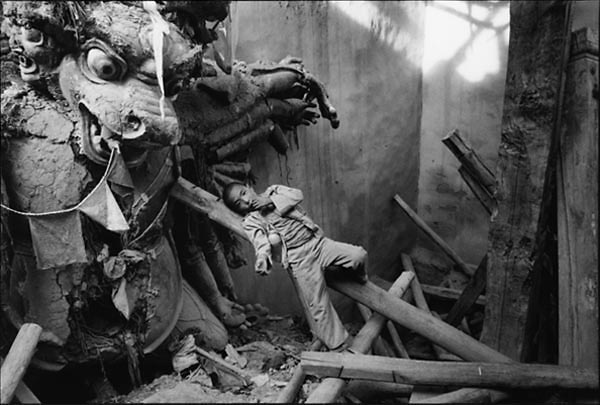
 In the year 1951 the Tibetan Plateau was invaded by the People’s Republic of China and subsequently the current Dalai Lama (Tenzin Gyatso) escaped into northern India for asylum and eventually was followed by approximately 80,000 Tibetan follower refugees during the following months. The PRC has also destroyed numerous monasteries and historical places of both cultural and religious significance. The Tibetan capital Lhasa is now Han Chinese in majority  and governed by a pro-Chinese puppet, called the Panchen Lama of whom is not recognised by the exiled Dalai Lama. The Dalai Lama was awarded the Nobel Peace Prize in the year 1989 for his peaceful resistance to the oppression of his people and a model for all oppressed peoples the world over. Since the invasion by the People’s Republic of China, Tibet has been under Chinese rule and is till this day. Tibetans feel their culture is under threat and sadly artefacts of cultural and historical significance have been destroyed. The Chinese People’s Liberation Army soldiers upon capturing the capital, Lhasa shelled the Dalai Lamas summer palace with around 800 shells destroying the ancient building as well as around 300 houses in the Palaces vicinity. Many Monasteries have been destroyed since the Cultural Revolution swept China and as a result many ancient artefacts and places of cultural and religious significance have been lost and religion has been suppressed under Communist rule.

Threat to Tibetan culture and way of life and the Chinese standpoint


 During over 60 years of Chinese rule, an estimated 1.2 million ethnic Tibetans have been killed according to the 14th Dalai Lama. Under 'sinicization' or changing Tibetan society and culture to resemble that of the Han Chinese. Most recently European parlements have been concerned about the forced state housing of 1.5 million 'Drokpa' (Tibetan nomads who make up a third of the approximate 6 million Tibetan population) and how their nomadic way of life is under threat. The Drukpa nomads are the second largest nomadic group in the world following Mongolia. The Chinese Government claims that Tibet is becoming a better place than what it used to be before the occupation. About 95 percent of the overall Tibetan population before 1959 were illiterate not being able to read or write. China also claims Tibetan culture is well preserved. Even if we take these arguments as fact, one must wonder about the cost of 'raising the quality of life' in Tibet. Was it worth the deaths of over 1.2 million people? If China claims that Tibet is becoming a much better place than what it was before the invasion why were tourists not permitted to enter the region until the mid 1980's? What is there to hide?

My view and my conclusion


In my opinion there are no ways to justify the ill treatment of the Tibetan people and the costs of Chinese occupation. In the light of facts it is rather sad to see world governments turning a blind eye to the issue and not taking a stand against Chinese illegal occupation of Tibet. Who knows what the future holds for long suppressed Tibet. China's larger neighbour the former USSR once had a remarkably similar situation to China today. The USSR invaded and controlled many countries for many years such as Kazakhstan, Azerbeijan and also the Eastern bloc countries until the fall of communism in the USSR and the fall of the iron curtain in Eastern Europe. So perhaps judging from history this could possibly happen with Chinas autonomous regions aswell. Similarly East Turkestan (Xinjiang) to the north west of Tibet is controlled by China, and the Uyghur people have gone through a similar story. In conclusion Tibet is a good lesson to all similarly suppressed people the world over and with the increase in media and intenet, awareness of the plight of the Tibetan people is becoming increasingly well known. To end i ask the reader was the invasion of Tibet in 1951 a so-called 'peaceful liberation' or was it an invasion followed with over 50 years of brutality and suppression under Chinese rule? I leave it up to you to decide.


Monday, 24 September 2012

References


References list:


B.B.C.News(n.d.).1959: Dalai Lama escapes to India. Retrieved August 25 , 2012, from             http://news.bbc.co.uk/onthisday/hi/dates/stories/march/31/newsid_2788000/2788343.       stm


B.B.C.News.(n.d).History. Retrieved August 25, 2012, from             http://news.bbc.co.uk/2/shared/spl/hi/guides/456900/456954/html/nn1page1.stm

 Branigan,T.(2012).China plans £3bn theme park in Tibet. Retrieved August 25, 2012, from             http://www.guardian.co.uk/world/2012/jul/06/china-plans-theme-park-tibet.

C.N.N US.(2011).Two more monks set themselves alight in China. Retrieved August 25 ,            2012, fromhttp://articles.cnn.com/2012-01-09/asia/world_asia_china-monks-       fire_1_tibetan-people-kirti-monastery-tibetan-monk?_s=PM:ASIA

Free Tibet, (2012). Tibet rising. Retrieved August 25, 2012,from http://www.freetibet.org/

Indigenous peoples issues and resources.(2012).Dalai Lama In UK As Self-Immolations    Amongst Tibetan Nomads Rise. Retrieved August 25, 2012, from 


Trove.(n.d.).Tibet Invasion Reported. Retrieved August 25, 2012,from              http://trove.nla.gov.au/ndp/del/article/26716194


Voice of America.(2012).Tibetan Sets Himself on Fire in Indian Capital. Retrieved August 25, 2012, from http://www.voatibetanenglish.com/content/tibetan-sets-himself-on-fire-in-   indian-capital-133236523/1266636.html


Wong,E.,(2012). Tibetan Envoys Resign As Situation Worsens. Retrieved August 25, 2012,        from http://chinadigitaltimes.net/2012/06/tibetan-envoys-resign-as-situation-worsens/


Xiaoming,L.(2012). Tibet is a better place than it used to be. Retrieved August 25, 2012,   from  http://www.telegraph.co.uk/news/worldnews/asia/tibet/9428783/Tibet-is-a-    better-place-than-it-used-to-be.html

Saturday, 25 August 2012

Ten Links:

Ten links related to the Tibet and PRC issue:


'Peaceful Liberation'?

1) http://news.bbc.co.uk/onthisday/hi/dates/stories/march/31/newsid_2788000/2788343.stm

This is an article by the BBC (British Broadcasting Company) and is written about the invasion of the Tibetan Plateau by the Peoples Republic of China in 1951 and the Dalai Lama (Tenzin Gyatso) escape into India for asylum with approximately 80,000 Tibetan follower refugees following during the following months. It also touches on the situation today and how the capital, Lhasa is now Han majority Chinese and governed by a pro-Chinese puppet, called the Panchen Lama of whom isnt recognised by the Dalai Lama. It talks briefly also about what the Chinese soldiers did upon capturing the capital including shelling the Dalai Lamas summer palace with around 800 shells destroying the ancient building as well as around 300 houses in the Palaces vicinity. The Dalai Lama was awarded the Nobel Peace Prize in the year 1989 for his peaceful resistance to the oppression of his people and a model for all oppressed peoples the world over.


2) http://articles.cnn.com/2012-01-09/asia/world_asia_china-monks-fire_1_tibetan-people-kirti-monastery-tibetan-monk?_s=PM:ASIA


A CNN article about the self-immolation of two Buddhist Tibetan monks in the Aba Tibetan- Qiang Autonomous prefecture. The two monks set them selves on fire in the south west China provence, Sichuan in protest against the Chinese occupation of their homeland and the erosian of their culture after over 60 years of Chinese occupation. The Chinese government in defense says that it has improved the lives of Tibetans and their standard of living and accuses the Dalai Lama, the spiritual exiled leader of Tibet as promoting the suicide attempts. The Dalai Lama refuses these claims.


3) http://news.bbc.co.uk/2/shared/spl/hi/guides/456900/456954/html/nn1page1.stm


This page by the BBC gives a brief summary of the history of the invasion and the events that led up to it. It touches on the fact that since the 13th century following Mongol rule, that it has been under Chinese control on and off and been under influence. In 1910 the Chinese Empire (then not communist until 1949) led a military invasion and captured the region until 1911, the time of revolution in the mainland. Until the 1940's Tibet operated as an independent nation. Yet Tibet's independance was only temporary as things changed upon China becomin g a communist state under Chairman Mao Zedong in in the year 1949. Since then Tibet has being under Chinese rule and is till this day. The article also touches on how the Tibetans feel their culture is under threat and how artifacts of cultural and historical significance have been destroyed as well as monasteries. This is a good article giving an overview of what led to the invasion and current plight of the long oppressed Tibetan people.


4) http://ca.news.yahoo.com/dalai-lamas-china-talk-envoys-resign-033236700.html

This article touches on the proposed talks between the leaders of the exiled Tibetan government and Beijing and also on the suicide protests against oppression under Chinese rule. Also some envoys resign from their positions after long frustration ofver the situation.


5) http://www.guardian.co.uk/world/2012/jul/06/china-plans-theme-park-tibet

An article about the proposal by Chinese (PRC) officials of building a theme park located approximately a mile from the city center of Lhasa, the capital of the Tibet Autonomous Region. The proposal hopes to attract 15 million tourists to the region of just over 3 million people by the year 2015. Some of the park will be themed on a Chinese princess called Wencheng who was the neice of the a seventh century Tang ruler who married a Tibetan of the Yarlung dynasty. This park will supposedly bring in money and tourism to boost the economy of the low populated region and hope to show through the tale of the Princess the idea of ethnic harmony. However the proposed park has brought up controversy by ethnic Tibetans who claim that it benefits Han Chinese more than the Tibetans themselves. Another reason why Beijing officials want the park built is to take pressure off the Jokhang monastery and the Barkhor. It is estimated to be constructed within the next 3 to 5 years at a cost of 18 billion Yuan over 1980 acres. Residential and commerial developments will be included.


6) http://www.telegraph.co.uk/news/worldnews/asia/tibet/9428783/Tibet-is-a-better-place-than-it-used-to-be.html

An article by the Telegraph UK that examines the claims that Tibet is becoming a better place than what i t used to be before the occupation. It touches on how 95 percent of the overall Tibetan population before 1959 were illiterate not being able to read or write. The article also examines Tibetan Buddhism and the influence of Tibeatn culture in music and how Tibetan style restaurants have been opening up all over China. The Chinese writer (Liu Xiaoming) also claims Tibetan culture is well preserved. A contrast to my other 10 links on the issues of occupation.


7) http://trove.nla.gov.au/ndp/del/article/26716194


This is a scan of an original newspaper clipping from the Australian Associated Press talking about the then 'supposed' invastion by Chinese forces into Tibet. It talks about the Tibetan/ China provincial border town of Kanjey of which is 650 miles north of the nations capital Lhasa being occupied by Chinese forces. The northern Tibetan provinces of Kaham and Thajido were occupied. This is a good article as it was written at the time of the invasion and by the way it is written it shows how some official sorces (in Calcutta) denied the claims.


8) http://ca.news.yahoo.com/tibet-exiled-pm-admits-dalai-lamas-shoes-hard-004822670.html

An article about the new Prime Minister in exile Lobsang Sangay talking about how he believes the Dalai Lamas shoes are hard to fill in and his own statement of "When I ran for the election I always thought I was coming to Dharamshala to serve the Tibetan people, and work under the Dalai Lama," Sangay told reporters in New Delhi. But I never thought that he would give us the surprise by saying 'you are on your own -- take all the political authority I have, and fill in the shoes and lead the Tibetan movement forward'. Even though to the shock of many Tibetans the Dalai Lama has stepped down from his political role and Sangay taking up position as PM, The Dalai Lama Tenzin Gyatso remains the spiritual leader of Tibetans.


9) http://indigenouspeoplesissues.com/index.php?option=com_content&view=article&id=15442:tibet-dalai-lama-in-uk-as-self-immolations-amongst-tibetan-nomads-rise&catid=31&Itemid=64

This is another article about the suicide protests of Tibetans recently (over 30 to count). It touches on the concerns of European parliaments towards the forced state housing of 1.5 million 'Drokpa' (Tibetan nomads who make up a third of the approximate 6 million Tibetan ethnic population) and how their nomadic way of life is under threat and is also a cause of concern to the exiled spiritual leader of Tibet, the Dalai Lama. The Drukpa nomads are the second largest nomadic group in the world following Mongolia.


10)  http://www.ajc.com/news/nation-world/exile-leader-says-tibetan-1502520.html

The latest article of a Tibetan exile setting himself on fire in the Indian capital New Delhi. Over 50 Tibetans have been reported as doing this form of protest in the last 2 years alone. The Tibetan political leader in exile, Lobsang Sangay is disapointed that these suicidal protests havent gained much attention on the world stage as the suicide of a Tunisian man sparked the Arab Spring.